
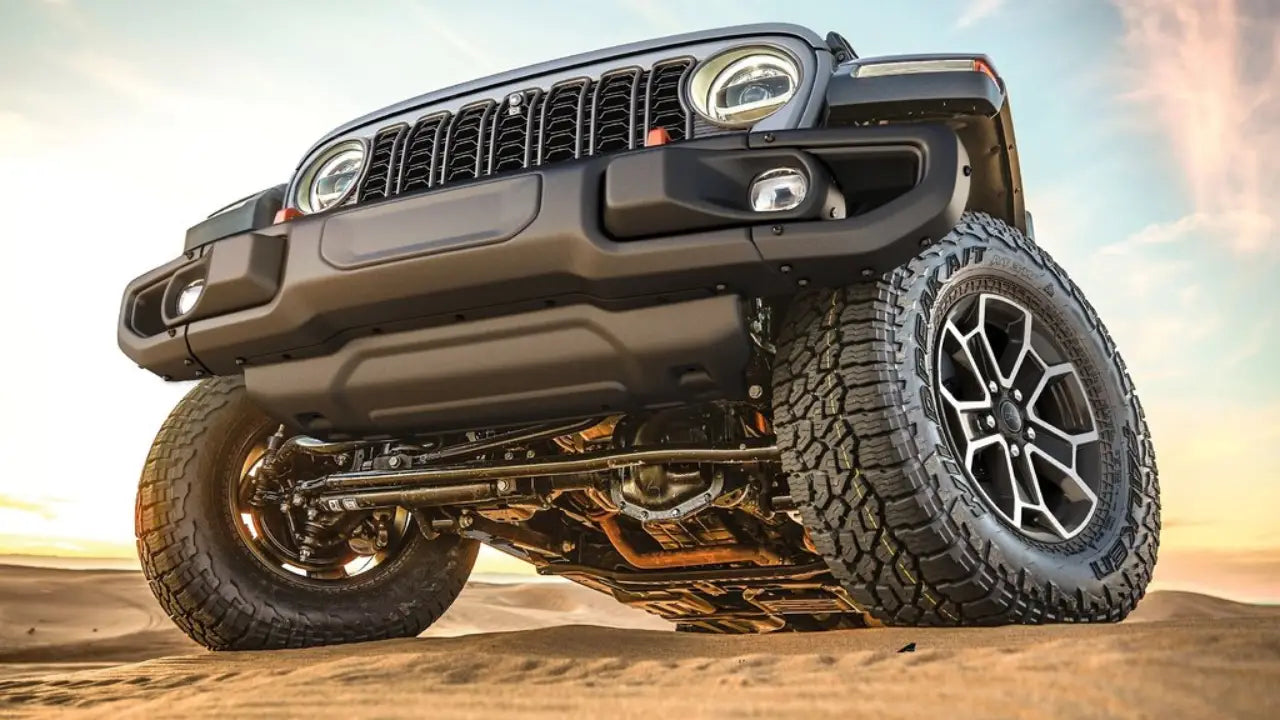
One of the most common modifications among off-road enthusiasts is upgrading to larger tires. Larger tires increase ground clearance, enhance appearance, and improve traction on specific terrain. Many drivers quickly notice an unintended consequence: poor throttle response and sluggish acceleration. If your vehicle seems heavier, slower to respond, or less agile after putting on larger tires, you’re not mistaken. This guide explains why bigger tires kill throttle response and, most importantly, how to fix it effectively.
Why Bigger Tires Reduce Throttle Response
The throttle response refers to the speed at which your vehicle responds to the pressure you apply with your right foot. The connection between driver input and engine output is essential. Installing larger tires fundamentally alters how power is transmitted from the engine to the road. Larger tires increase the vehicle's size and affect weight distribution, leverage application, and engine performance. The end result is a machine that needs more work to perform at the same level. Your engine remains strong, but it is now facing a significantly more challenging mechanical configuration. Here are the reasons why bigger tires reduce throttle response:

Increased Rotational Mass
One of the most significant factors affecting throttle response is rotational inertia. Bigger tires not only have a greater weight, but they also spread that weight further from the center of rotation. This significantly raises the energy needed to set them in motion. Consequently, each time you press the accelerator pedal, the engine has to work harder to turn the tires. This extra effort delays the vehicle's response time. The effect is especially evident when starting from a stop, as the engine must overcome both inertia and friction simultaneously.
Altered Gear Ratios (Effective Gear Reduction)
The most significant effect of larger tires is a change in your vehicle's effective gear ratio. As the tire diameter increases, each rotation travels a greater distance. This change may lower engine RPM at cruising speeds, but it also decreases torque multiplication. Your vehicle operates as though it is consistently in a higher gear. This reduces the mechanical advantage required for rapid acceleration, making the vehicle feel underpowered. The engine might generate the same amount of power, but a smaller portion of it reaches the road.
Reduced Torque at the Wheels
Torque is the force that propels your vehicle forward. The larger tires increase the distance from the axle to the ground, which decreases the force exerted at the contact point. This change acts as a longer lever, reducing the engine's output effectiveness. The outcome is reduced acceleration, particularly at lower speeds. Vehicles with oversized tires often struggle with quick launches and steep inclines.
Increased Rolling Resistance and Friction
Bigger tires, especially wider ones, enhance the contact patch with the road. This change can enhance traction but also increase rolling resistance. Increased resistance requires your engine to exert more effort to sustain speed, not to mention the challenge of accelerating. This ongoing additional load hampers throttle response and decreases overall efficiency.
Aerodynamic and Mechanical Drag
Bigger tires often make it harder for air to flow around the car, especially if they are bigger than the original size. This makes air drag worse, especially at high speeds. At the same time, the extra size and weight put more stress on mechanical components such as the suspension and engine. This adds more resistance for your engine to overcome, making it even slower.
ECU, Transmission, and Speedometer Disruption
Modern vehicles depend significantly on electronic systems to control performance. Changing tire size can lead to misalignment in these systems. The speedometer might display inaccurate readings, the transmission shift points may no longer be optimal, and the engine control unit may have difficulty providing the correct fuel and throttle inputs. This mismatch results in a delay between your commands to the vehicle and its responses, causing the throttle to feel inconsistent and sluggish.
Signs Bigger Tires Are Hurting Your Throttle Response
After upgrading to bigger tires, you may notice:
-
A noticeable delay between pressing the accelerator and the vehicle responding
-
Slower acceleration from a complete stop, with the car feeling heavier and less eager
-
Reduced passing power when trying to overtake at higher speeds
-
Increased throttle input needed to achieve the same level of acceleration
-
Frequent or irregular transmission shifting, especially under load
-
Difficulty maintaining speed on inclines, often requiiring downshifting
-
Decreased fuel efficiency due to increased engine workload
-
A heavier, less agile driving feel compared to stock setup
-
Engine strain becoming more noticeable during everyday driving
-
Overall loss of responsiveness, making the vehicle feel sluggish and less connected to driver input
How to Fix Throttle Response After Installing Bigger Tires
Now let’s get into the most critical part: how to fix the problem properly.
Re-Gear Your Differential
The best way to get back lost speed is to re-gear the differential. You can regain the torque multiplication you lost during the change by adjusting the gear ratio to match the bigger tires. In this way, the engine can operate over a wider range and deliver power to the wheels more efficiently. Usually, the change in throttle response is huge, making the car feel responsive and capable again.
Tune the ECU
An ECU tune recalibrates the vehicle’s internal systems to account for the new tire size. This includes optimizing throttle mapping, adjusting fuel delivery, and improving overall engine performance. With the correct tuning, the vehicle can regain much of its responsiveness and operate more smoothly, eliminating much of the lag introduced by larger tires.
Recalibrate the Speedometer/PCM
Adjusting the speedometer and powertrain control module guarantees that the vehicle’s systems function with precise information. Recalibrating these systems correctly improves the accuracy of transmission shift points and guarantees reliable engine performance. This step is crucial for reestablishing harmony between the vehicle's mechanical and electronic systems.
Reduce Wheel and Tire Weight
Selecting lighter wheels and tires can greatly lessen the adverse effects of larger tire sizes. Reducing rotational mass allows the engine to require less torque to overcome, which enhances acceleration and throttle response. Even small weight reductions can significantly impact how the vehicle performs during daily driving.
Consider a Power Upgrade
Boosting engine output can offset the additional load caused by larger tires. Upgrading performance through enhanced airflow, exhaust systems, or engine tuning can deliver the additional power required to regain responsiveness. This approach necessitates extra investment, but it can improve overall performance and give the vehicle a more capable feel during acceleration.
Install a Throttle Response Controller
A throttle response controller enhances the speed at which the vehicle responds to pedal input by modifying the signal between the accelerator and the engine. Although it doesn't enhance actual power, it minimizes perceived lag and gives the vehicle a more responsive feel. This is often one of the quickest and most noticeable improvements you can make after upgrading to larger tires.
The Ultimate Throttle Response Controller: Pedal Commander®
If bigger tires are making your ride feel sluggish, the best throttle response controller, Pedal Commander®, can really help you feel the difference right away. It intercepts the signal between the accelerator pedal and the ECU (Engine Control Unit), optimizing it so the throttle opens faster than factory settings allow and reducing the delay you often feel with bigger, heavier tires. Instead of just hitting the gas and waiting for the car to respond, you get a quicker, more direct feel, making the ride feel lighter and more agile in daily driving.

Without increasing actual horsepower or making mechanical changes like altered gear ratios, Pedal Commander® significantly improves how the vehicle feels by eliminating throttle lag. Its adjustable modes (Eco, City, Sport, and Sport+) let you fine-tune sensitivity to suit your driving style, whether you prefer aggressive acceleration or smoother control. For drivers seeking a fast, effective solution without complex modifications, Pedal Commander® is an ideal upgrade to restore confidence and responsiveness after installing larger tires.